
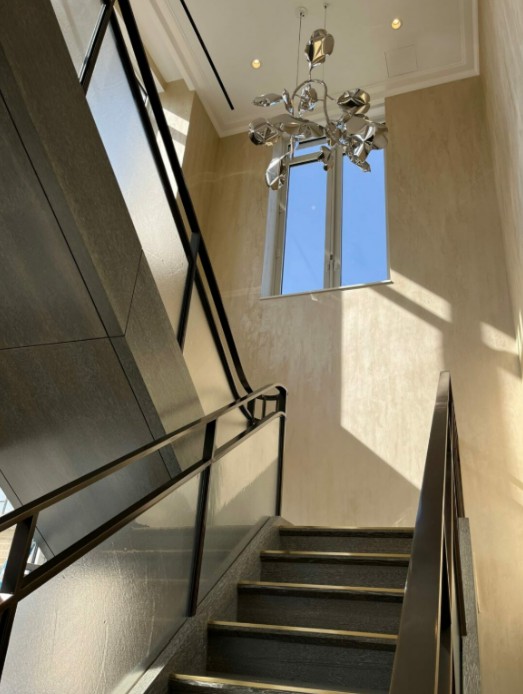
Venetian plaster is usually the better choice when you want warmth, depth, and a truly elevated wall finish. Microcement is usually the better choice when you want a seamless concrete look, especially across floors and wet areas, and you are willing to spec and prep it properly.
Why this comparison matters
Venetian plaster and microcement can look similar in a Pinterest screenshot. In real spaces, especially NYC apartments where light shifts constantly, they behave very differently.
One is a layered, hand crafted finish designed to create movement and softness. The other is a cement based coating designed to create a continuous, minimal surface. They are both premium, but they are premium in different ways.
Quick definitions you can trust
Venetian plaster is a traditional plaster finish used for walls and ceilings, applied in layers and finished by hand. Architectural Digest notes the renewed interest in Venetian plaster and lime plaster in general, tied to both modern compositions and the design world’s focus on natural materials.
Plaster itself is one of the oldest building techniques, and Britannica describes plaster as a pasty composition that hardens on drying and is used for coating walls and ceilings.
Microcement is a thin cementitious coating applied in multiple layers and sealed. It is often chosen because it can create seamless, joint free surfaces across floors and walls.
The difference you actually feel
Venetian plaster tends to feel warmer and more dimensional. Even in a single color, it holds movement.
Microcement tends to feel more architectural and minimal. It is cleaner, more uniform, and closer to a concrete look.
If your goal is a wall that feels like a material, Venetian plaster usually wins. If your goal is a continuous concrete aesthetic, microcement usually wins.
Venetian plaster vs microcement comparison table
| Factor | Venetian plaster | Microcement |
| Best use | Upscale interior walls, feature walls, ceilings | Floors, wet areas, continuous concrete look |
| Visual character | Layered depth, soft movement, can be matte or softly reflective | Smooth and uniform, typically matte or low sheen |
| Light behavior | Changes noticeably through the day | More consistent and flat by design |
| Risk profile | Strong results when the substrate is stable and prep is right | Highly dependent on substrate stability, system design, and sealing |
| Repairs | Often easier to blend when installed by specialists | Repairs can be harder to hide on seamless fields |
| Best fit in NYC | Great for apartments where light and warmth matter | Great for modern baths and floors when properly specified |
When Venetian plaster is the better choice
You are choosing a wall finish, not a floor system
Most homeowners asking this question are focused on walls. Venetian plaster was made for that role.
It adds luxury wall textures without wallpaper seams, repeat patterns, or grout lines. It also scales beautifully, from a single accent wall to a whole home treatment.
You want depth and a refined glow
Venetian plaster has a visual softness that tends to read more luxury in person. It is one reason it keeps showing up in high end design coverage, and why it has stayed relevant across styles.
You want the wall to feel custom, not manufactured
This is the part that is hard to fake. A great plaster wall has tiny variations that make the room feel finished. It does not need to be loud to be impressive.
When microcement is the better choice
You want a seamless concrete look
If you want floors and walls that feel continuous and modern, microcement is built for that.
It is especially popular in ultra modern interiors where you want the architecture to look clean and uninterrupted.
You want grout free wet areas
Microcement is often selected for bathrooms and wet rooms because it can create a seamless surface where tile would normally add a lot of visual lines.
This is not a place to cut corners. Microcement is a system, not a single product, and performance depends on the full build up and sealing.
Your project needs a cement based performance approach
If you are treating the finish more like a performance surface than a decorative wall finish, it can be useful to think in standards and testing language.
Room by room recommendations table
| Space | Better choice | Why |
| Living room feature wall | Venetian plaster | Warmth, depth, beautiful in shifting light |
| Bedroom | Venetian plaster | Calm texture, less glare, more softness |
| Entry and stairwell walls | Venetian plaster | High impact without adding clutter |
| Powder room walls | Either | Venetian plaster for warmth, microcement for concrete mood |
| Shower enclosure | Microcement | Better suited to seamless wet zones when specified correctly |
| Bathroom floors | Microcement | Continuous surface, modern look |
| Kitchen backsplash | Either | Choose by vibe and maintenance preferences |
The deciding factor most blogs skip: the substrate
This is where NYC projects get real.
Older buildings can have layered paint, patched plaster, hairline movement, or uneven substrates that look fine until you put a rigid finish on top. Microcement is less forgiving when there is movement underneath. Venetian plaster also needs proper prep, but it is often the more forgiving choice for interior walls when the goal is a refined finish.
If you take one thing from this, it should be: the quality of the prep and the installer matters more than the marketing.
Durability and maintenance in plain terms
Venetian plaster walls are durable for normal living when installed correctly and finished appropriately. Maintenance is usually light cleaning, and touchups are best handled by someone who can match the original technique.
Microcement can be durable, especially on floors, but it depends heavily on the sealing system and ongoing care. If you want a microcement bathroom, plan to treat it like a premium surface with proper cleaning and periodic maintenance.
Cost: why you will see wide ranges
Both finishes can swing widely in price because labor, prep, access, and finish complexity matter more than material cost.
If a quote seems dramatically lower than others, it usually means something is being skipped. Prep, waterproofing, and finish steps are not optional in a premium system.
The bottom line
If you want warmth, depth, and a finish that looks intentionally crafted, Venetian plaster is usually the better choice. If you want seamless concrete style continuity across floors and wet areas, microcement is usually the better choice, assuming the substrate and system are handled correctly.
If you are stuck choosing between the two, do not guess from photos. The smartest step is to view samples in your actual lighting and talk through where the finish will live.
Book a consultation with Decorfin to compare finish options, review sample mockups, and get a recommendation that fits your space and how you live.
FAQs
Is microcement waterproof
It can be suitable for wet areas when installed as a complete system with correct waterproofing and sealing.
Does microcement crack
It can if the substrate moves or the system is not designed and installed correctly. Prep matters.
Can Venetian plaster be used in bathrooms
Yes for many bathroom walls and powder rooms. Direct water zones require careful specification.
Which is better for a NYC apartment with lots of natural light
Venetian plaster often looks richer because it reacts to changing daylight and adds depth.
Which is easier to touch up
Venetian plaster walls are often easier to blend when the original finish is installed by specialists who can replicate the technique. Microcement repairs can be more visible on seamless floors and large fields.
Which one looks more modern
Both can look modern. Microcement reads more industrial and minimalist. Venetian plaster reads more modern luxury and refined.